

Cryolipolysis, also called fat freezing, is a non-invasive body contouring treatment that uses controlled cooling to target and destroy stubborn fat cells. This cryolipolysis FAQ answers your most common questions about safety, results, cost, and candidacy. You can reduce localized fat without surgery or downtime. The procedure works by cooling fat cells to a temperature that causes them to crystallize. Your body then naturally eliminates these damaged cells over time. This guide provides evidence-based information to help you make an informed decision. You will find clear, expert answers to help you understand what to expect from this popular body contouring option.
Key Takeaways

Cryolipolysis freezes fat cells. Your body removes them naturally. Full results appear over several months. This safe treatment avoids surgery.
Ideal candidates maintain a healthy weight. They target stubborn fat pockets. A BMI below thirty improves eligibility. Lasting results require stable weight.
Common side effects include redness, swelling, numbness. These issues fade quickly. Rare complications remain possible. Report concerns promptly.
Most people need one to three sessions. Providers wait weeks between treatments. Visible changes require patience. Good planning sets expectations.
Choose a qualified provider. Ask about certifications. Review follow-up care. Seek a second opinion for unusual growth. Trust your concerns.
What Is Cryolipolysis and How Does It Work?

YouTubeCryolipolysis is a non-surgical procedure that uses controlled cooling to freeze and destroy fat cells without harming your skin or organs. You may know this treatment by its most popular brand name, CoolSculpting. This section explains the science behind the treatment and what you can expect from it.
What Is CoolSculpting?
Understanding CoolSculpting starts with recognizing it as the original branded cryolipolysis system. CoolSculpting was the first cryolipolysis system approved by national and international regulators and has been used for millions of treatment cycles worldwide. When people ask what is CoolSculpting, they are essentially asking about the most well-known version of cryolipolysis technology. Numerous clinical studies report that CoolSculpting is safe and effective across many body sites, including the submental area under the chin, with high patient satisfaction. A prospective study reports significant improvement in body contour with multiple CoolSculpting cycles. Research by Kilmer and colleagues published in Lasers in Surgery and Medicine in 2016 supports the safety and efficacy of cryolipolysis for non-invasive reduction of submental fat. A separate 2020 study by Jain and colleagues in Aesthetic Surgery Journal used 3-dimensional quantitative analysis to demonstrate measurable volume loss following submental cryolipolysis.
How Does It Work?
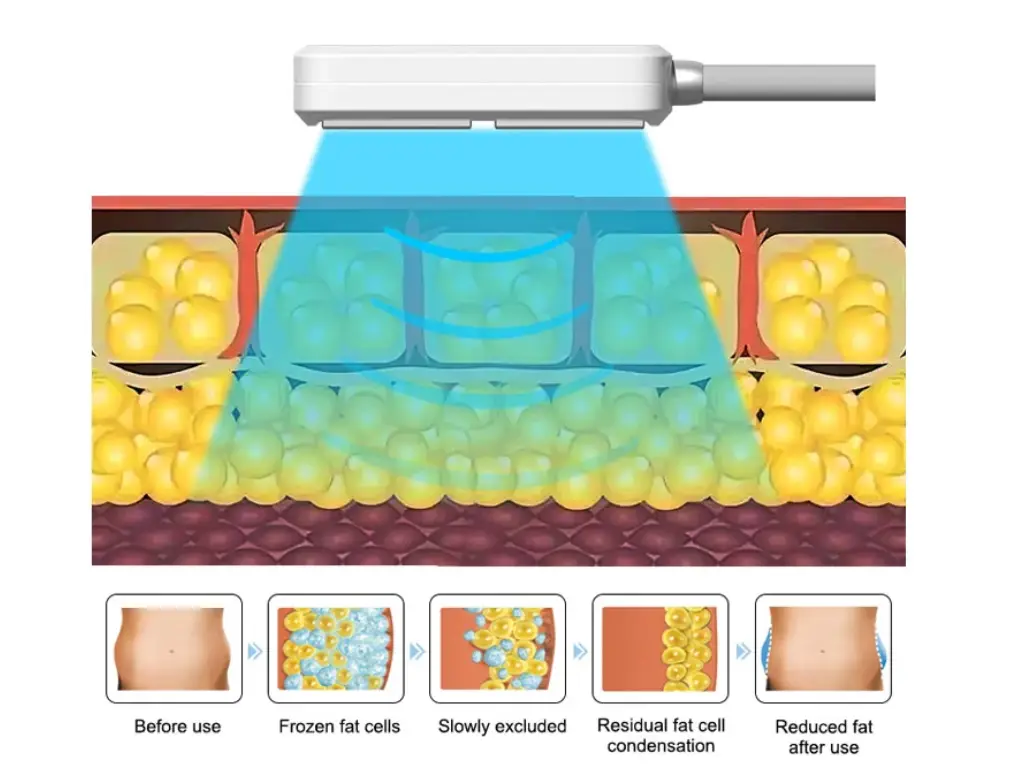
The mechanism behind how does it work involves several biological steps. Cryolipolysis applies controlled cooling to fat cells beneath your skin while sparing surrounding tissue. Fat cells are more cold-sensitive than skin or muscle. The cold causes lipids inside the fat cells to crystallize, which disrupts the cell structure and triggers apoptosis, the body’s natural process of programmed cell death. Your body then recognizes the damaged cells, initiates a mild inflammatory response, and sends immune cells to break them down. Over several weeks, the affected fat cells are processed and eliminated through your lymphatic system. The lymphatic system flushes out the remnants gradually, and the breakdown components are processed by the liver and excreted through natural waste removal.
Clinical studies show measurable fat reduction after treatment. Caliper measurements show an average fat layer reduction ranging from 14.67% to 28.5%. Ultrasound measurements show an average reduction ranging from 10.3% to 25.5%. A single treatment to the peritrochanteric area produced 19.7% reduction. One study measured 12.6% reduction on a non-massaged side at 2 months and 10.3% at 4 months. This non-invasive fat reduction approach differs from laser treatments, which use heat or sonic waves, and injection therapies, which chemically dissolve fat. Surgical liposuction is invasive and carries risks like scarring and extensive recovery.
You should understand that cryolipolysis is not a weight-loss procedure. It is a fat reduction treatment designed for stubborn bulges that resist diet and exercise. The fat cells destroyed are permanently eliminated, but remaining fat cells can still enlarge if you gain weight. This makes maintaining a healthy lifestyle important for long-lasting results.
Cryolipolysis FAQ: Safety and Comfort
Is It Safe and FDA-Cleared?
Yes, cryolipolysis is safe and cleared by the FDA to treat visible fat bulges in nine areas of the body. These areas include the abdomen, thighs, buttocks, and under the chin. Health authorities have approved the technology after extensive study. The treatment has a low incidence of side effects. Most users experience only temporary redness, swelling, or numbness.
Does It Hurt?
Most patients find the treatment tolerable. You may feel minimal discomfort, stinging, or cramping during the session. A study on cryolipolysis treatment of arms and inner thighs found that 14 patients (41.2%) reported pain, with a median duration of 7 days (range 1–14 days). Patients receiving treatment on the arms reported a higher degree of pain and dysesthesia during treatment compared to other treated sides. One subject withdrew from the study because she could not bear the pain and dysesthesia during treatment on her right upper arm. The applicator was removed 45 minutes after starting treatment. The authors recommend warning patients about potential pain and dysesthesia during arm treatment sessions.
After treatment, 8 out of 41 patients (19.5%) required analgesics for pain. At 2 weeks after treatment, 0 patients reported pain. Numbness affected 2 out of 41 patients (4.8%), and tingling sensation affected 1 out of 41 patients (2.4%). Discomfort was reported by 96% of patients, general pain by 55%, and bruising by 9.5%–50%. These side effects are typically mild and temporary. Safety is supported by extensive study and health-authority approvals. You should discuss any concerns with your provider before treatment.
Who Is a Good Candidate?
Ideal Candidates
You are an ideal candidate for cryolipolysis if you are close to your ideal weight but have stubborn fat pockets that resist diet and exercise. Your body mass index should fall below 30 kg/m², which means you are not obese. A qualified provider will confirm that your fat layer is thick enough for the vacuum applicator to attach properly. One published case report describes a patient who was not obese and had a sufficient fat layer for applicator attachment, making her an ideal candidate for submental cryolipolysis.
You must also have normal skin sensation in the treatment area. Your skin should be free of fibrosis, which can block suction and make areas like the thighs harder to treat. Maintaining a healthy lifestyle after treatment is crucial for long-lasting fat reduction results. The procedure destroys fat cells permanently, but remaining cells can still enlarge if you gain weight.
Who Should Avoid Treatment
Certain medical conditions disqualify you from treatment. A certified provider should assess your health history before scheduling any session. Cold-related disorders present the clearest contraindications. These include cryoglobulinemia, cold agglutinin disease, paroxysmal cold hemoglobinuria, and known cold sensitivity such as cold urticaria or raynaud’s disease.
| Category | Contraindications / Precautions |
| Cold-related disorders | Cryoglobulinemia; paroxysmal cold hemoglobinuria; cold urticaria; Raynaud’s disease |
| Circulatory issues | Impaired peripheral circulation in the treatment area |
| Neurologic conditions | Neuropathic disorders; impaired skin sensation |
| Skin/wound issues | Open or infected wounds; recent surgery or scar tissue; eczema, dermatitis, or rashes |
| Bleeding risks | Bleeding disorders or use of blood thinners |
| Anatomical concerns | Hernia in or near the treatment site |
| Reproductive status | Pregnancy or lactation |
| Implanted devices | Pacemakers and defibrillators |
You should also avoid treatment if you have a positive rheumatoid factor linked to conditions like Sjögren’s Syndrome, lupus, or rheumatoid arthritis. Cardiovascular disorders and elevated cholesterol levels do not exclude you based on current evidence. Always discuss your full medical history with your provider to confirm suitability.
How Many Sessions Are Needed?
Typical Treatment Plans
The number of cryolipolysis sessions you need is individual. It depends on your treatment goals and the number and size of your problem areas. Some people need only one session for a single problem area. Others need more than one session for multiple areas or repeated treatment of the same area. If you require more than one session, your provider should wait 6 to 8 weeks before the next session. This waiting period allows your body to complete the inflammatory response and clear the damaged fat cells.
Optimal visible results are not immediate. They may take 3 to 6 months to appear. A single session can produce roughly 15% to 28% fat reduction in the treated pocket. Your provider will typically assess your results around 4 months after the initial treatment. You may notice earlier changes as early as 3 weeks after treatment. More dramatic improvement often appears after about 2 months. This cryolipolysis faq section helps you set realistic expectations for your treatment timeline.
Factors That Affect Session Count
Several factors influence how many sessions you will need. The table below outlines the key variables.
| Factor | Fewer Sessions (1-2) | More Sessions (2-3+) |
| Fat layer thickness | A small, well-defined fat pocket may respond sufficiently after a single cycle. | A thicker fat deposit often requires staged treatments to achieve a visible contour change. |
| Area size | A compact region (e.g., under the chin) is easier to assess and refine. | A broad area (e.g., abdomen or flanks) may need multiple treatment positions or cycles. |
| Individual response | Clear improvement with minimal residual fat may indicate no further sessions are needed. | A remaining distinct fat pocket that is still treatable may justify an additional cycle. |
Most patients need 1 to 3 sessions per area, spaced 6 to 8 weeks apart. The exact number depends on fat thickness, target area size, and your desired outcome. A review appointment is more useful than promising a fixed number in advance. The MinXu 360’s three cryo handles and eight interchangeable size heads allow simultaneous treatment of multiple areas. This design improves efficiency and can reduce the total number of visits you need.
Results and Longevity
When Results Become Visible
You will not see changes immediately after your session. Your body needs time to process the damaged fat cells. During the first four weeks, you may notice no visible difference. Side effects like redness, tenderness, or numbness typically resolve within days to a couple of weeks. Between weeks four and eight, subtle changes begin. You might feel a slight softening or flattening of the treated area before you see it in the mirror.
Visible results usually emerge between weeks eight and twelve. Your clothing may fit differently, and the treated area becomes noticeably smaller or more contoured. Full results typically appear by weeks twelve to sixteen. Clinical data supports this timeline. A study assessing outcomes at twelve weeks found a mean skinfold thickness reduction from 35.4 mm to 22.2 mm, a mean percentage change of 40%. Patient satisfaction reached 88% among 58 participants, with no adverse events recorded in that cohort.
Official consumer materials state that up to 20% to 25% of fat in a treated area may be eliminated with each CoolSculpting session, which helps explain why many patients can see a visible contour difference after one session or a small number of treatments.
This does not mean the entire area becomes flat. It means a portion of the fat layer in that treated zone may be reduced. On the right patient, this can improve waistband fit, soften flank fullness, or improve submental definition.
Are Results Permanent?
The fat cells destroyed by cryolipolysis are permanently eliminated. After early adulthood, the number of fat cells in your body stabilizes. Adults do not create new fat cells to replace those removed by treatment. Cryolipolysis causes fat cells to crystallize and die through apoptosis, a natural and irreversible form of cellular death. Your body does not produce new fat cells in the treated area, so the reduction in fat cell number is permanent.
This differs from weight loss through diet and exercise. When you lose weight that way, fat cells merely shrink. They remain available to expand again if you regain weight. Cryolipolysis offers a lasting fat reduction in the treated zone.
However, the remaining fat cells in the area and elsewhere can still enlarge if you gain weight. The treated zone may then grow unevenly. Long-term follow-up studies are limited, so the biological argument for permanence is stronger than the trial evidence for it. Most published studies are small, and follow-up rarely extends beyond a year. Maintaining a stable weight helps preserve your results.
Side Effects and Risks
Most people tolerate cryolipolysis well. You can expect some temporary reactions after treatment. Understanding these side effects or risks helps you know what is normal and what needs follow-up.
Common Side Effects or Risks
Common side effects include redness, swelling, bruising, tingling, numbness, and mild discomfort. You might also notice firmness, transient blanching, stinging, cramping, or tenderness. These changes stay in the treated area and resolve without special care. The timing varies by symptom. Redness can fade within hours or days. Bruising may last up to two weeks. Swelling, numbness, and tingling often persist for several weeks.
A 2025 systematic review pooled data from 30 studies with 3,158 participants. Numbness occurred most often, with a pooled incidence of 49.5%. Erythema followed at 44.5%. Edema appeared in 30.5% of cases. Pain affected 28.8%. Sensitivity occurred in 25.4%. Tingling appeared in 15.2%. Hyperpigmentation affected 2.0%. More than 17 million CoolSculpting procedures have been performed worldwide. This large real-world experience supports a low-risk safety profile.

This chart shows how common each reaction is in clinical research. Most cases are mild. You may need over-the-counter pain relievers if discomfort becomes bothersome. Your provider should review expected reactions before you start. Most symptoms resolve within days or weeks, and no downtime is required.
Rare Complications and Management
Rare complications require more attention. The most discussed is paradoxical adipose hyperplasia, or PAH. With PAH, the treated area becomes firm and enlarges instead of shrinking. The condition is uncommon. A 2025 meta-analysis reported a pooled incidence of about 0.22%, or roughly 1 in 455 treatments. Other datasets estimate around 1 in 3,000 treatments, a rate of 0.033%. Onset typically happens 2–5 months after treatment. The condition shows no evidence of spontaneous resolution. Male patients appear over-represented among reported cases. One clinic reported a center-specific incidence of 0.67% based on four patients.
Management of PAH follows a clear protocol. First, wait until the tissue softens, usually 6–9 months after cryolipolysis. Further cryolipolysis is not a treatment for PAH. Surgical intervention is the main option. Liposuction, excision, or abdominoplasty can remove the abnormal tissue. Your provider should refer you to a plastic surgeon experienced in secondary body contouring. In one small series, all four patients underwent liposuction or abdominoplasty. Three of the four had no residual deformity, and none showed recurrence after final surgical treatment. Revision surgery may still be necessary in some cases.
Other rare events include severe pain, late-onset pain, freeze burn, hyperpigmentation, treatment area demarcation, vasovagal symptoms, and subcutaneous induration. Severe pain occurs in about 1 in 6,000 treatments. Late-onset pain begins several days after the session. Freeze burn is extremely rare, at about 1 in 15,000 treatments. Hyperpigmentation appears in about 1 in 11,000. Treatment area demarcation occurs in roughly 1 in 20,000. Vasovagal symptoms and subcutaneous induration each appear in about 1 in 30,000.
You should contact your provider if you notice firmness, unusual pain, or skin changes that persist. They can assess whether you need monitoring or referral. Prompt reporting gives you the best chance for a smooth recovery. Remember, rare complications are just that: rare. The vast majority of patients complete treatment with only mild, temporary effects.
Cost and Treatable Areas
Average Pricing and What Affects It
Your total cost depends on several variables. Pricing varies by provider, geographic location, number of areas treated, and number of sessions. In the United States, the country-level average per session is $700–$1,500. Urban centers typically charge 15–30% more than mid-sized or rural clinics, even with identical equipment and protocol.
| Treatment area | Average cost per session (USD) | Typical sessions |
| Abdomen/Stomach | $600–$1,200 | 1–3 |
| Chin (submental) | $400–$700 | 1–2 |
Each applicator placement equals one cycle. A lower abdomen often needs two cycles, so the total cycles directly set your treatment price. Larger or curved applicators cover broader areas and cost more per cycle. Board-certified plastic surgeons or highly trained technicians may charge more, but their experience improves applicator positioning, safety, and outcomes. Package deals reduce per-session cost. For example, 4–7 cycles receive 10–15% off, and 8+ cycles receive 15–25% off.
Popular Treatment Areas
Cryolipolysis targets stubborn fat pockets that resist your best efforts. Treatable areas include the abdomen, thighs, buttocks, and under the chin. These spots are notoriously resistant to diet and exercise. The submental region, commonly called the double chin area, responds well to treatment. Thighs and flanks also rank among the most requested sites.
These diet and exercise resistant fat pockets often frustrate people who maintain a healthy lifestyle. Cryolipolysis offers a targeted solution for fat reduction and body contouring. The procedure destroys fat cells in the treated zone permanently. You should understand that remaining fat cells can still enlarge with weight gain. This makes stable weight maintenance important for lasting results. A qualified provider can assess which areas will respond best to your personalized treatment plan.
Customization and the MinXu 360

Image Source: pexels
Personalized Treatment Planning
Every body responds differently to a non-invasive fat reduction treatment. A qualified provider builds your plan around your unique shape, fat distribution, and goals. The MinXu 360 supports this personalized approach through detailed assessment before any session begins.
Your provider follows a structured planning process. They review your medical history, medications, prior surgeries, weight history, and skin quality during the initial consultation. They then examine the target area while you stand to distinguish treatable subcutaneous fat from loose skin or muscle bulging. The treatment area is measured to confirm that fat can be safely drawn into a suction applicator. Applicators are mapped according to your body shape, fat pocket size, and symmetry needs. Standardized photographs document your baseline for fair later comparison. Concerns outside cryolipolysis scope are referred to dermatology, plastic surgery, endocrinology, or nutrition.
Multi-Technology Approach
The MinXu 360 Cryolipolysis Fat Freezing Slimming Machine combines cryolipolysis with vacuum therapy, Lipolaser, cavitation, and radiofrequency (RF) to target fat from multiple angles. The proprietary 360° nozzle ensures even cooling distribution. Vacuum enhances circulation and lymphatic drainage. RF stimulates collagen for tighter skin. This synergistic blend not only accelerates fat loss but also improves skin laxity.
The MinXu 360 destroys fat cells permanently while helping you achieve a slimmer, more defined physique.
During and After Treatment
The In-Office Experience
Your cryolipolysis session follows a straightforward process. During your initial consultation, you discuss your goals with the provider. They examine the target area and create a personalized treatment plan. On treatment day, you lie down comfortably. The technician marks the treatment area and applies a gel pad to protect your skin. The provider then places the targeted area between two paddles that deliver controlled cooling with suction. You feel a pulling sensation and intense cold at first. Numbness follows after a few minutes. Each targeted area takes about 30 minutes, though some sources state 35–60 minutes per area depending on size and number of areas treated. Larger areas may need multiple sessions.
The treatment is non-invasive, requires no anesthesia, and involves minimal downtime. You can return to your normal routine right away. Common sensations include numbness, tingling, stinging, redness, and swelling in the treated area. Numbness may last from several days up to two to three months. Most people regain normal sensation after two to three weeks, though some may take up to a month.
Aftercare Tips
Proper aftercare helps your body process the frozen fat cells and reduces discomfort. Your body needs several weeks to eliminate these cells, so results appear gradually rather than immediately. Full results are usually seen around 12 weeks. Maintaining them depends on lifestyle factors such as diet and exercise.
Follow these practical steps after your session. Massage the treated area to help make the fat-freezing process more effective and reduce discomfort. Take over-the-counter pain relievers such as acetaminophen or NSAIDs; prescription painkillers are not required. Use a warm compress, do gentle exercise, or wear compression clothing to manage discomfort. Light exercise like walking, hydration, and a healthy diet support recovery. Avoid strenuous exercise, heavy lifting, and intense workouts for at least one week. Skip hot baths, hot tubs, or saunas for a few days. Wear loose-fitting clothing and limit sun exposure to the treated area. Contact your provider if more severe symptoms occur after treatment. Speak with the technician at your next appointment about unusual side effects or questions regarding treatment-area care.
Handling Unsatisfied Patients
Not every patient sees the result they hoped for after cryolipolysis. You should know how your provider handles this situation before you commit to treatment. A structured response protects your investment and your health.
Follow-Up Protocols
A responsible provider follows a clear protocol when results fall short. They reassess or modify your original treatment plan rather than dismissing your concern. They wait 4–8 weeks between treatment sessions and roughly 8 weeks after the final session before judging the overall outcome. Thighs or fibrous fat may need longer intervals. Your provider may also perform postprocedural massage, discuss side effects, and provide self-care recommendations. Standardized before-and-after photographs help you recognize visible improvement you might otherwise miss.
Revision options exist for patients who remain unsatisfied. Your provider can offer additional treatment cycles, which typically produce more visible and clinically successful outcomes than a single session alone. When a poor responder needs visible improvement, alternative treatments may also help. Setting realistic expectations at the start makes this conversation easier for everyone.
When to Seek a Second Opinion
You should seek another board-certified provider in specific situations. The treated area continues to grow after the procedure, which suggests paradoxical adipose hyperplasia rather than simple weight gain. Your provider misidentifies the growth as weight gain and recommends more cryolipolysis instead of recognizing a complication. Additional cryolipolysis is proposed as a solution, since PAH does not resolve on its own and usually requires surgical correction. You were treated in a med spa or by an unlicensed professional, a setting linked to more frequent complications.
Other warning signs apply broadly. Your treatment plan is not producing meaningful improvement after a reasonable period. You received conflicting diagnoses or still feel uncertain about the previous provider’s explanation. A concern is dismissed without a thorough evaluation or clear justification. The provider immediately recommends an aggressive intervention without discussing safer or less invasive alternatives. You leave without clearly understanding the condition or the next steps. Your physical or emotional quality of life continues to suffer despite treatment. A second opinion from a qualified provider can help correct the course.
Cryolipolysis offers a safe, non-invasive body contouring treatment for stubborn bulges. Results appear gradually but last; candidacy matters. You remain the best fit when you stay near your ideal weight and keep healthy habits. Destroyed fat cells vanish permanently. Remaining cells can still enlarge after weight gain. Side effects stay mild and temporary. Cost and session count vary by individual, so your provider tailors the plan. Skip general information alone. Seek a board-certified, qualified provider for a personalized assessment. They will confirm whether this treatment matches your goals. This cryolipolysis faq gave you clear answers. Your next step is a professional conversation. Decide with confidence.
FAQ
How Long Does a Cryolipolysis Session Take?
Each targeted area takes about 30 minutes. Some sources state 35 to 60 minutes per area depending on size. You can return to your normal routine right away. No anesthesia is required.
When Will I See Results?
Results appear gradually. You may notice changes as early as three weeks. Most visible improvement emerges between weeks eight and twelve. Full results take about three to four months. Your body needs time to eliminate damaged fat cells.
Does Fat Freezing Permanently Remove Fat Cells?
Yes. Destroyed fat cells never return. Adults do not create new fat cells to replace them. Remaining fat cells can still enlarge if you gain weight. Maintaining a stable weight preserves your contour. This cryolipolysis faq point matters for long-term expectations.
What Should I Ask During a Consultation?
Prepare frequently asked questions before the consultation. Ask about candidacy, session count, cost, and side effects. Your questions to ask providers should include certifications, experience with your treatment area, and the follow-up protocol.
Discover more from Minxu
Subscribe to get the latest posts sent to your email.