

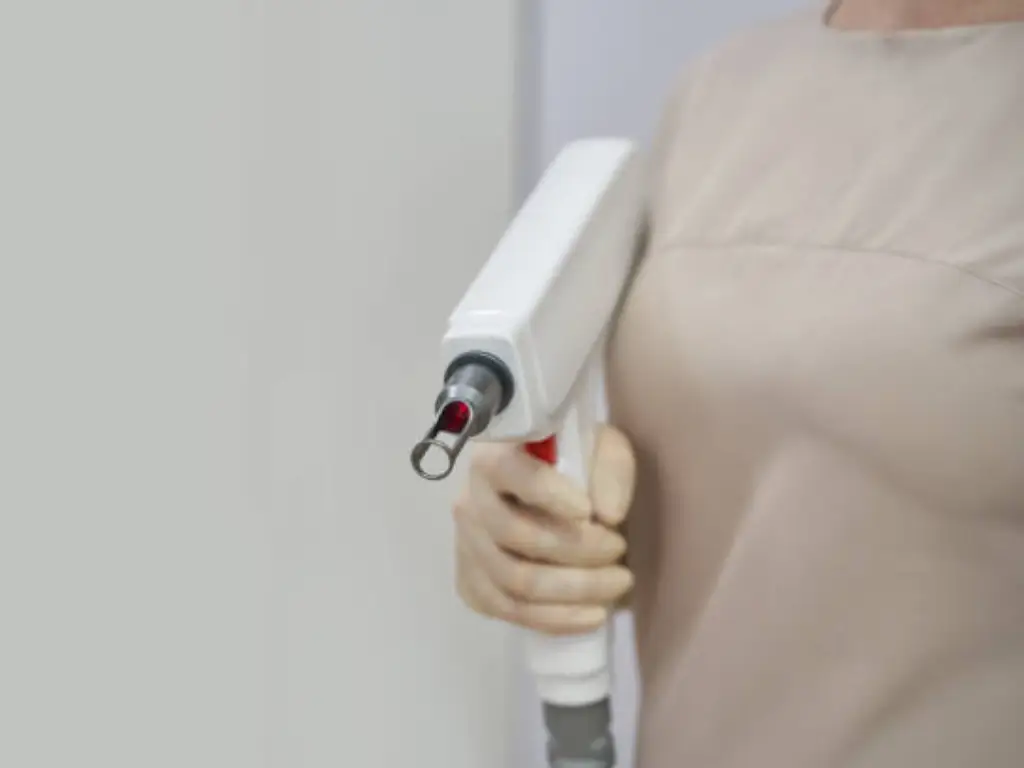
Laser facial machine cost typically falls between $1,800 and $250,000 — an 80-fold spread. Three variables drive that gap: the laser source and after-sales infrastructure. The sticker price tells only part of the story. Ongoing expenses, compliance paperwork, and payback speed often decide whether a purchase succeeds. Picture clinic owners comparing a $5,000 diode machine with a $50,000 CO2 system. One machine costs ten times more than the other. Both can treat faces. Only one fits their clientele, budget, and treatment menu. That gap demands careful thought. Price alone cannot answer the question. A confident buying decision starts with real numbers, not brand names.
Key Takeaways
-
Laser facial machines cost $1,800 to $250,000. Three factors drive the price: laser source, certification, and after-sales support.
-
Entry-level machines cost $1,800 to $10,000. They suit new clinics with basic needs and limited budgets.
-
Mid-range machines cost $10,000 to $50,000. They offer better tubes and certifications for growing clinics.
-
High-end machines cost $50,000 to $250,000+. They provide advanced features and long tube life for busy practices.
-
Budget 10-15% of the machine price yearly for consumables, maintenance, and repairs. This avoids financial surprises.
-
A diode hair removal machine can pay back in 3-6 months. High volume and good pricing speed up your return.
-
OEM branding lets you customize machines with your logo. Minimum orders start at 1-5 units for many models.
How Much Does a Laser Facial Machine Cost?
A laser facial machine cost ranges from $1,800 to $250,000 or more. That 80-fold spread confuses many clinic owners. Three key variables drive the difference: the laser source and after-sales infrastructure. Cosmetic laser machine prices vary this widely because each component tier serves a different buyer. A solo practitioner needs a reliable entry unit. A dermatology group needs a platform with full regulatory clearance. Both treat faces. Both need predictable results. The machine that fits depends on the clinic’s clientele and budget.
MinXu enters this market as a factory-direct manufacturer from Guangzhou. The company operates a 12,000-square-meter ISO 13485-certified facility. Its laser facial equipment offers value-driven alternatives to premium Western brands. This positions MinXu between budget imports and high-end Western systems.
Entry-Level Machines: $1,800 to $10,000
Entry-level systems serve independent practices and new clinics. These machines typically include basic fractional mode with manual controls. Laser tube life ranges from 3,000 to 5,000 hours for DC-excited tubes. IPL and multi-function systems fall into this bracket at $2,000 to $15,000. Basic single-function IPL units start around $2,000. Imported multi-application systems reach $15,000. Buyers should note one caveat: entry-level multi-function units often deliver 30 to 40 percent less actual energy than displayed. This gap affects treatment consistency and patient satisfaction.
Mid-Range Machines: $10,000 to $50,000
Mid-range systems add dual scanning modes and touchscreen interfaces. Laser tube life reaches 8,000 hours or more with South Korean or Japanese tubes. These machines suit growing clinics with diverse treatment menus. The laser source alone accounts for 35 to 50 percent of total machine cost. German and U.S. sources cost $3,000 to $10,000 per tube. Mid-tier South Korean and Japanese sources cost $1,500 to $4,000. Domestic Chinese tubes cost $300 to $1,500. The quality difference matters. A tube losing 30 percent energy by year two reduces effective treatment capacity for years three through five. That decline can cost tens of thousands in lost patient revenue.
High-End Machines: $50,000 to $250,000+
Premium systems deliver RF-excited CO2 technology with AI planning and 0.12mm spot adjustability. These platforms carry full regulatory packages. Laser tube life extends to 8,000 to 20,000 hours with brands like Lumenis, Candela, and Deka. The real-world pricing tiers reflect more than hardware. Certification and regulatory compliance adds 15 to 25 percent to factory cost. Component origin matters too. Medical-grade stainless steel, SMT boards with 48-hour burn-in, and branded compressors from Danfoss or Panasonic cost two to three times more than generic parts. Feature configuration adds incremental costs. Touchscreen, preset protocols, AI assistance, and cloud data management each increase the price. Brand track record commands premium pricing. Established manufacturers with 98 percent or higher on-time delivery and above 25 percent reorder rates charge accordingly. Production scale creates a 10 to 15 percent unit cost difference. Guangdong volume factories price lower than Beijing R&D-focused makers.
After-sales infrastructure is baked into the purchase price. Warranty length, response time, remote diagnostics, and spare parts availability all factor in.
Your laser machine goes down on a Wednesday afternoon. You have four patients booked for Friday. That moment is when the true cost of “budget” equipment reveals itself. Quality after-sales support has measurable dimensions: response time (under 1 hour for premium suppliers, under 4 hours for standard, over 24 hours for budget), remote diagnostic capability, spare parts availability (3 days vs. 2-week lead times), and warranty terms (2 years vs. 1 year). The $2,000 saved on a machine with thin after-sales support evaporates the first time you cancel a full Friday schedule waiting 48 hours for an email reply.
MinXu addresses these factors through SMT-assembled circuit boards, 48-hour burn-in testing, medical-grade stainless steel frames, and high-temperature silicone-jacketed wiring. The company assigns a dedicated project engineer to each order. Spare parts ship within three days. Remote video diagnostics and multi-language support reduce downtime risk. For clinic owners weighing laser facial machine pricing, these details separate a wise investment from an expensive mistake.
Cosmetic Laser Machine Prices by Type

Image Source: pexels
Technology type drives cosmetic laser machine prices more than any other factor. A CO2 platform and a diode system serve different purposes. Each carries its own cost structure. Buyers who understand these differences make smarter purchasing decisions.
CO2 Laser Machines: $15,000 to $200,000+
Fractional CO2 laser machines for aesthetic clinics typically cost between $20,000 and $100,000 in 2025. Price varies based on features, brand, and technology. Cheaper models tend to be basic. Higher-priced models offer advanced capabilities. Features like cooling systems, touchscreens, dual wavelengths, and portability can increase the price. Additional costs such as training may also affect the total price. A clinic that treats deep wrinkles and scars needs this platform. A clinic focused on hair removal does not.
MinXu offers entry-level CO2 fractional systems for independent practices. The company also provides mid-tier dual-mode platforms. These combine fractional and pixel scanning with touchscreen interfaces and enhanced certification packages. MinXu machines use quality laser sources with rated tube lifespans of 8,000 to 20,000 hours. This equipment lifespan reduces replacement frequency and long-term ownership costs.
Diode Laser Machines: $3,000 to $80,000
Diode systems cover a wide price band. Entry-level units serve low-volume clinics with basic cooling and smaller spot sizes. Mid-range models suit growing clinics that handle 50 to 200 treatments per month. Premium all-in-one platforms combine multiple wavelengths for high-volume and multi-skin-type clinics.
| Tier | Price Range | Details |
| Entry-level diode | $3,000 – $5,000 | Basic cooling, smaller spot sizes, suited to low-volume clinics |
| Mid-range diode | $5,000 – $8,900 | For growing clinics handling 50–200 treatments/month |
| Non-diode premium all-in-one | $9,200 – $18,000 | 755nm Alexandrite + 1064nm Nd:YAG, for high-volume and multi-skin-type clinics |
Most mid-range clinics choose 4-wavelength diode units in the $5,000 to $8,900 band. MinXu supplies advanced diode configurations within this category. Each cosmetic laser machine undergoes SMT assembly and 48-hour burn-in testing before shipment.
Nd:YAG Laser Machines: $5,000 to $100,000
Nd:YAG platforms treat pigmentation, vascular lesions, and skin tightening. Long-pulsed systems target deeper tissue. Q-switched versions handle tattoo removal and pigment correction. The price depends on pulse duration, energy output, and cooling design. A basic Q-switched unit starts near $5,000. A dual-wavelength platform with advanced cooling reaches $100,000 or more.
MinXu includes Nd:YAG and endolift configurations in its advanced lineup. These systems support subdermal facial lifting and pigmentation work. Buyers comparing cosmetic laser machine prices across types should match the technology to their treatment menu. A cosmetic laser machine that cannot perform the clinic’s top three procedures will not deliver returns.
Buying Laser Equipment: Key Factors
Choosing a laser facial system involves more than comparing sticker prices. The wrong choice can become one of the most expensive mistakes a clinic can make. A machine that cannot perform the top three procedures sits idle. It still consumes floor space, training hours, and maintenance budgets. The real cost of laser equipment reveals itself over years, not at checkout.
Seven hidden cost factors determine whether a purchase pays off. They include laser source type and quality, component origin, certification, features, brand track record, production scale, and support infrastructure. Each element shifts total ownership cost. A clinic owner who ignores them risks buying a unit that fails during peak service weeks.
Laser Source Quality and Components
The type and quality of the laser source stand as the most important cost drivers. It determines energy consistency, treatment speed, and how long the system lasts. Fractional CO2 systems rely on sealed laser tubes. Diode systems use stacks of semiconductor emitters. Nd:YAG platforms depend on pulsed crystals and flash lamps. Each configuration comes with its own maintenance rhythm.
Component origin also pushes prices apart. Medical-grade stainless steel frames resist corrosion and repeated cleaning. High-temperature silicone-jacketed wiring tolerates heat stress far better than cheap PVC insulation. Circuit boards assembled with surface-mount technology handle vibration and thermal cycling better than hand-soldered boards. MinXu builds its systems with SMT-assembled circuit boards and medical-grade stainless steel frames. Every unit undergoes a 48-hour burn-in test before shipment. That test runs the machine at operating conditions to expose weak parts early. The result is a cosmetic laser machine with fewer early failures and steadier beam output.
Ongoing Costs to Budget For
The purchase price is only the beginning. Operational costs include consumables, training, maintenance, and service contracts. Clinic owners who plan for these expenses avoid surprises. A cosmetic laser machine demands a realistic annual budget. Most clinics should set aside 10% to 15% of the machine’s original purchase price each year for consumables, preventative maintenance, and minor repairs. That reserve covers deionized water filters, disposable protective patient eyewear, and conductive cooling gels. It also prepares the clinic for unexpected part failures.
Training and Staff Certification
Proper training protects patients and equipment. Staff must learn energy settings, pulse durations, and cooling protocols for each treatment. Manufacturer training programs vary in cost and depth. Some suppliers include training with the purchase. Others charge separately for on-site or remote sessions. Certification requirements differ by region and device class. Clinic owners should confirm training costs before signing a quotation. A well-trained team delivers consistent results and reduces costly operator errors.
Consumables and Replacement Parts
Consumable costs vary by device type and treatment volume. Diode laser handpieces are rated for 20 to 40 million shots. They typically require replacement every one to three years depending on patient volume. The laser bar stack inside the handpiece is the most expensive component to replace, often costing several thousand dollars. Sapphire tips, filters, and contact windows are wear items designed for replacement. Clinics should obtain written quotes for these parts rather than relying on unverified figures.
Flashlamp replacement costs differ across platforms. The table below shows common examples.
| Device | Flashlamp Replacement Cost | Annual TCO Impact |
| PicoSure | $3K (OEM) / $2K (refurbished) | $12K–$18K |
| PicoWay | $3.5K (OEM) / $2.2K (refurbished) | $10K–$15K |
| Cynosure IPL | $2.5K (OEM) / $1.8K (refurbished) | $8K–$12K |
Fiber optic repairs in handpieces cost $1.5K to $3K and occur after 6 to 18 months. PicoSure handpiece replacement runs $8K to $12K and lasts 500K to 1M pulses. PicoWay handpieces cost $10K yearly due to fiber issues and last 1 to 2M pulses. Flashlamp replacements cost $2K to $5K per unit. CO2 laser tubes are consumables as well. A 40W lamp lasts 50 to 200 hours at 100% power. A 100W tube lasts about 2,500 hours. A 400W tube yields about 10,000 hours. Focus lenses require monthly cleaning and replacement if burned. Mirrors need regular cleaning and replacement. Industrial chillers typically fail after about four years. CO2 power supplies tend to fail around six years of operation.
Maintenance, Installation, and Service Contracts
Service contracts cover routine filter changes, calibration, and emergency repairs. A typical 12-month agreement includes two annual preventative maintenance services, discounted emergency service calls, unlimited technical phone support, no labor or travel fees, discounted parts, and priority troubleshooting within 24 hours. Overall annual maintenance ranges from $2,000 to $10,000 depending on system complexity and utilization. CO2 systems with mirror and lens maintenance cost $1,000 to $2,000 per year. Fiber lasers with protective windows cost $200 to $400 per year.
Manufacturer service contracts, such as Cynosure’s, can cost $12K–$20K annually, with additional escalation and recertification fees.
MinXu provides after-sales support through remote video diagnostics, multi-language support, and spare parts shipped within three days. A dedicated project engineer handles each order. This level of after-sales support reduces downtime and protects revenue. Payment options also matter because lasers represent a significant capital investment. A total launch budget should account for the machine, training, consumables, and a service reserve. Every startup or expansion cost deserves careful calculation before purchase.
ROI and Payback Period
Treatment prices range from hundreds to thousands per session. That spread shapes every payback calculation. A clinic charging $485 per nonablative session reaches breakeven far slower than one charging $4,055 per ablative session. Location matters too. Dermatology offices command higher fees than medical spas for the same procedure category. Clinic owners should map their own pricing against these benchmarks before projecting revenue.
Estimating Revenue Per Treatment
National averages give buyers a starting point. The American Society of Plastic Surgeons reports an average of $697 per laser skin treatment. A 2025 study found nonablative procedures average $1,083 in dermatology offices, $736 in plastic surgery practices, and $485 in medical spas. Ablative procedures run higher: $4,055 in dermatology offices, $3,154 in plastic surgery practices, and $1,157 in medical spas. Full-face erbium resurfacing costs $2,000 to $2,500 per session, with a national average near $2,071. Spot treatments range from $750 to $1,500.

Typical Payback Periods by Machine Type
A diode laser hair removal machine in an aesthetic clinic illustrates realistic numbers. At $100 per session, five clients per day, and 26 operational days per month, monthly gross revenue reaches $13,000. Gross profit margin exceeds 80%. Estimated payback lands between three and six months.
| Item | Value |
| Machine considered | Cosmetic diode laser hair removal machine in an aesthetic clinic |
| Average session price | $100 |
| Daily clients served | 5 |
| Operational days per month | 26 |
| Monthly gross revenue | $13,000 |
| Gross profit margin | Above 80% |
| Estimated payback period | 3 to 6 months |
MinXu equipment payback is typically achieved in six to nine months. That range reflects broader treatment menus and varied session pricing across clinic types.
Factors That Speed Up or Slow Down ROI
Several forces accelerate equipment roi. High treatment volume fills appointment slots faster. Premium pricing for ablative or resurfacing procedures lifts revenue per hour. Strong margins above 80% shorten the breakeven window. A clinic that markets aggressively and retains patients keeps the machine productive.
Other factors delay returns. Slow patient acquisition leaves capacity idle. Downtime from poor after-sales support cancels booked sessions. Weak training reduces treatment quality and repeat visits. A cosmetic laser machine that cannot perform the clinic’s top procedures generates little revenue regardless of purchase price. MinXu helps clinics turn capital equipment into recurring revenue through factory-direct pricing, remote diagnostics, and spare parts shipped within three days. Buyers who model revenue, margin, and volume before purchase protect their laser equipment investment from becoming an idle asset.
OEM and Custom Branding
What OEM Manufacturing Means
OEM stands for Original Equipment Manufacturing. Under this model, a brand supplies its logo and packaging requirements, and the manufacturer handles complete machine production, assembly, and quality inspection. The client’s company name becomes the brand, while the device keeps the manufacturer-engineered hardware inside.
OEM (Original Equipment Manufacturing) refers to brand private labeling: you provide brand LOGO and packaging requirements, and we take charge of complete machine production, assembly and quality inspection.
MinXu supports full OEM/ODM customization across its laser equipment line. Buyers can localize the UI language, customize the housing appearance, design branded packaging, and file certification documentation under their own brand name. The process follows six stages: requirement analysis, concept and design, prototype and testing, mass production, packaging and branding, and delivery with after-sales support. Each stage gives the buyer a checkpoint before the next begins.
Cost Implications of Custom Branding
Custom branding adds cost, but the scope of customization determines how much. A single-color logo and a boot screen swap cost far less than a fully branded body with Pantone-matched colors and a custom UI language. The table below shows what buyers can and cannot customize.
| Customization Element | OEM Availability | Description |
| Logo & Branding | Yes | Client logo applied to machine body, screen boot animation, handpiece, packaging, and user manual |
| Machine Color | Yes | Custom body, accent, and handpiece colors with Pantone matching |
| UI Language & Software | Yes | Any screen UI language; custom treatment protocols and clinic workflow presets |
| Packaging Design | Yes | Custom-branded flight case, retail box, user manual, and quick-start guide |
| Handpiece Design | Limited | Shell color and logo only; internal optical/electrical design excluded due to certification impact |
| Hardware Specifications | No (OEM) | OEM keeps existing certified hardware unchanged |
| Certification | Uses existing |
Hardware changes stay off the table under OEM because they would invalidate existing certifications. Buyers who need new hardware must move to full ODM, which may require fresh certification and longer lead times.
When OEM Makes Sense for Your Business
OEM suits clinics and brands that want market differentiation without engineering risk. A cosmetic laser machine with a clinic’s own logo and packaging builds customer recognition. It also avoids the generic look of off-the-shelf models.
MinXu offers MOQ flexibility starting at one to five units for many certified configurations. That low threshold lets startup beauty brands test a market before committing to bulk inventory. A new brand can order a small batch, gauge demand, and scale up only after real sales data arrives. Service tiers range from Basic OEM with a single-color logo and standard packaging to Standard OEM with a fully branded body, custom color, custom UI language, and branded manual. Full ODM covers hardware and software changes with possible new certification. This tiered structure lets each buyer match investment to ambition.
A Complete Buyer’s Guide: Pre-Purchase Checklist

Image Source: unsplash
Must-Ask Questions Before You Buy
A complete buyer’s guide starts with the right questions. Clinic owners should compare laser technology, wavelengths, energy output, pulse duration, and spot sizes across every candidate machine. They must ask whether the system treats their target indications and whether it offers standalone or platform configurations. Standalone lasers tend to be robust workhorses with a single wavelength. Platform lasers cost less to own and maintain but treat a narrower range of conditions per applicator.
Training deserves equal scrutiny. Buyers should ask how much time the manufacturer commits, whether the program includes supervised hands-on practice, and whether certifications come with completion. They should also confirm warranty terms, consumable costs, and after-sales support response times. A demonstration matters. Buyers should insist on keeping the machine in the clinic for at least two treatment sessions before committing. Understanding the type of clients the clinic intends to target is the first step in selecting a laser.
Negotiation Tips and Financing Options
Smart negotiation begins with a financial stress test. Buyers should model conservative utilization, downtime, staffing, and marketing costs against treatment pricing. They should ask about preventive maintenance policies, loaner equipment, uptime guarantees, and parts availability. Extended warranty costs and annual service fees belong in the comparison.
Financing options matter because lasers represent a significant capital investment. Buyers can negotiate training packages, consumable pricing, and service contracts as part of the total deal. When clinic owners purchase a cosmetic laser, they should request written quotes for all ongoing costs. A cosmetic laser machine that fits the budget at purchase but strains operations later is no bargain. Careful negotiation protects the clinic’s investment and supports long-term profitability.
Cosmetic Laser Machine Prices in Australia
Market Overview and Price Ranges
Australian clinics face price ranges similar to global markets. Entry-level diode systems start near $3,000. Premium CO2 platforms reach $200,000 or more. The same three variables drive these figures: laser source, certification depth, and support infrastructure. Australian buyers pay more than U.S. or European clinics for identical equipment. Import duties, Goods and Services Tax, and freight charges add to the landed cost. A machine quoted at $20,000 overseas may arrive at $26,000 or higher after these charges. Clinic owners should calculate the full landed cost before comparing quotes. Cosmetic laser machine prices in Australia reflect these additional layers.
Regulatory Considerations for Australian Clinics
The Therapeutic Goods Administration governs laser devices in Australia. Every cosmetic laser machine must appear on the Australian Register of Therapeutic Goods before a clinic can legally use it. ARTG listing is mandatory for all cosmetic lasers. Class 3B and 4 lasers carry specific safety requirements that operators must understand and meet. State-by-state training and licensing rules apply, with especially strict enforcement in Queensland and Western Australia. Operators must complete accredited training units for laser hair reduction. Non-compliance can lead to penalties and insurance issues.
Advertising rules add another compliance layer. Clinics must follow TGA, AHPRA, and Australian Consumer Law requirements. Claims must be truthful, accurate, and evidence-based. Before-and-after images are permitted for cosmetic-level laser facials only where they remain cosmetic and non-therapeutic. Images must not be filtered or retouched and must show typical results. A variation disclaimer such as “Individual results vary. General information only.” provides context but does not cure a misleading impression.
| Requirement | Regulator or body | Applies to | State variation |
| Device listing on ARTG | TGA | The device/business | National |
| Advertising compliance | TGA and AHPRA | The clinic and staff | National |
| Cosmetic laser license | State health department | The business and each operator | Queensland, WA and Tasmania only |
| Health service permit | Department of Health WA | A medical practitioner or nurse practitioner | Western Australia only |
| Skin penetration approval | Local council | The premises | NSW notifies, Victoria registers, Queensland licenses |
Sourcing Options and Import Costs
Factory-direct pricing from MinXu reduces landed costs compared to premium Western brands. The company ships to more than 180 countries and assigns a dedicated project engineer to each order. Spare parts ship within three days, which shortens downtime for Australian clinics. Laser machines cost in Australia less when buyers source directly from certified manufacturers. MinXu offers remote video diagnostics and multi-language support to bridge the distance. Buyers should still verify that the exact model carries the documentation their state requires. A cosmetic laser machine with proper certification protects the clinic from legal exposure and audit failures.
Laser facial machine cost spans from $1,800 to $250,000, but the sticker price never tells the whole story. Clinic owners must weigh clientele, treatment menu, and budget before choosing a cosmetic laser machine. The pre-purchase checklist and ROI calculations turn guesswork into a data-driven decision. Following these steps helps buyers avoid the most expensive mistake a practice can make.
MinXu offers certification depth, build quality, and factory-direct economics. That combination makes it a strong benchmark for comparison. Demand for laser facial treatments continues to grow. Well-prepared buyers will capture that opportunity by selecting equipment that fits their practice and delivers predictable returns.
FAQ
Three variables explain most of the difference: laser source quality, and after-sales infrastructure. A German or U.S. laser tube costs $3,000 to $10,000, while a domestic Chinese tube runs $300 to $1,500. Certification and regulatory compliance adds 15 to 25 percent to factory cost.
How long do laser tubes typically last?
Rated tube lifespans range from 3,000 to 5,000 hours for basic DC-excited tubes. Mid-range systems reach 8,000 hours with South Korean or Japanese sources. Premium platforms extend to 8,000 to 20,000 hours. MinXu machines use quality laser sources within the 8,000 to 20,000 hour range.
What ongoing costs should a clinic budget for each year?
Clinics should set aside 10 to 15 percent of the machine’s purchase price annually. That reserve covers consumables, preventative maintenance, and minor repairs. Service contracts range from $2,000 to $10,000 per year depending on system complexity. Diode handpieces need replacement every one to three years.
How fast can a clinic recover its investment?
Payback depends on treatment volume and pricing. A diode hair removal machine at $100 per session with five daily clients can pay back in three to six months. MinXu equipment payback typically lands in six to nine months. Gross margins above 80 percent shorten the breakeven window.
Does MinXu offer OEM branding for clinics and distributors?
Yes. MinXu provides full OEM/ODM customization, including UI language localization, housing appearance changes, branded packaging, and certification documentation filed under the buyer’s brand. Minimum order quantities start at one to five units for many certified configurations. This lets startup brands test a market before bulk orders.
How does after-sales support affect the true laser facial machine cost?
Slow support turns a discount into a liability. A machine down for 48 hours cancels booked appointments and loses revenue. MinXu assigns a dedicated project engineer to each order. Remote video diagnostics and multi-language support reduce downtime. Spare parts ship within three days.
What is the first step in choosing the right laser system?
Clinic owners should identify their target clientele and top three procedures first. A machine that cannot perform those procedures generates little revenue regardless of price. Buyers should then compare wavelengths, energy output, training programs, warranty terms, and total ownership costs across candidates.
Discover more from Minxu
Subscribe to get the latest posts sent to your email.